

If you are a forex trader, you may have noticed that currency prices sometimes move very quickly within a few moments. A currency pair that was moving slowly can suddenly rise or fall after an economic announcement, this is where an economic calendar becomes useful.
An economic calendar is a tool that shows upcoming economic events, financial data releases, central bank decisions, and other announcements that may affect financial markets. Traders use it to understand when important market-moving events are scheduled and build their trading strategies accordingly.
For beginners, an economic calendar may look complicated because it contains many dates, currencies, numbers, and impact levels, but once you understand every part, it becomes much easier to access.
In this guide, we will explain what an economic calendar is, how it works, how to read an economic calendar, which economic indicators matter most, and how forex traders can use it effectively. If you want to explore more about the economic calendar read our complete post.
What Is an Economic Calendar?
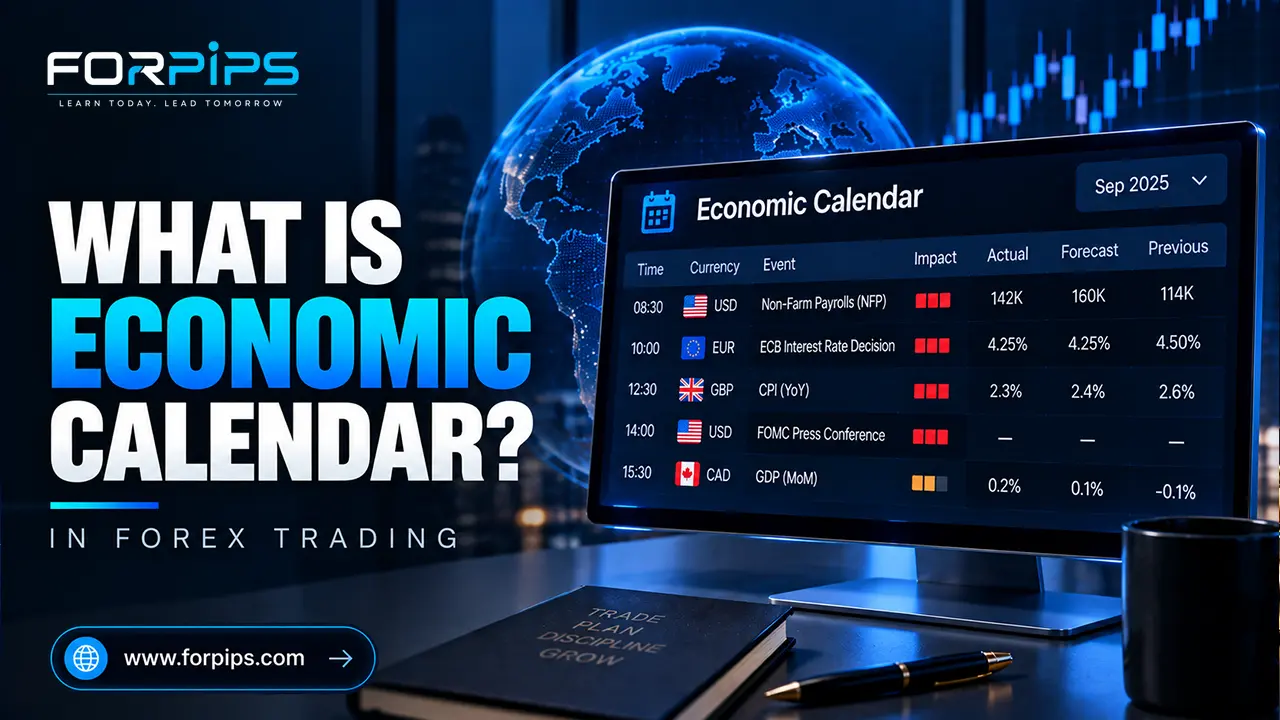
An economic calendar is a scheduled collection of upcoming crucial economic events and data releases that can influence financial markets all over the globe. It includes a wide variety of information such as, date & time, expected currency, expected market events, and value after the announcement.
Economic calendars cover events from economies around the world. Common events include inflation reports, employment data, GDP releases, interest-rate decisions, manufacturing data, consumer confidence reports, and central bank speeches.
Additionally, for forex traders, this information can be useful because economic news can influence the value of currencies. For example, an important US economic report may cause movement in the US dollar. This can then affect currency pairs such as EUR/USD, GBP/USD and USD/JPY.
Why is an Economic Calendar Important in Forex Trading?
The forex market reacts to changes in economic expectations. When new information is released, traders compare the actual result with what they were expecting, this can sometimes create sudden price movements and market inflation.
Another vital aspect is that an economic calendar helps traders know when these events are scheduled instead of being surprised by an announcement. With the help of an economic calendar traders can easily understand, find out important news, understand the reasons that may affect the rate of currency, enable them when the correct time to take the trade, and allows them to understand the market volatility.
It is important to remember that an economic calendar does not predict exactly what the market will do. It simply helps traders understand when potentially important information is scheduled.
How Does an Economic Calendar Work?
Most economic calendars display events in a table. Although the design may differ from one platform to another, the main information is usually similar. The most common columns are time, currency, impact, event, actual, forecast, and previous. Let’s understand each one in detail.
1. Date and Time
Date and time plays a vital role as it tells you when the economic event is scheduled. Always check the calendar’s time zone. A release that appears at a particular time on your calendar may be displayed differently if your selected time zone changes.
2. Currency
The currency column shows which currency may be most directly affected by the event. If an important USD event is scheduled, traders may pay closer attention to USD-related currency pairs.
3. Impact
Economic calendars often classify events according to their expected market impact. A common system uses low, medium, and high impact. High impact events are generally expected to have a greater potential to create market volatility.
4. Event
Another essential function of the economic calendar is it tells you what economic data or announcement is being released. Information such as employment date, retail sale, GDP, and rates of interest. BY understanding the event helps you understand why traders may be watching it.
5. Forecast
The forecast is the expected result before the official release, it is generally based on economists or analysts expectations.
6. Previous
The previous figure shows the result from the last reporting period, it is very helpful in understanding the context when comparing the latest release with earlier data.
7. Actual
The actual figure appears when the data is officially released. Traders often compare the actual result with the forecast because a larger than expected difference can change market expectations and trigger price movement.
What are the Major Economic Indicators for Forex Traders?
Not every economic event has the same importance. Beginners should first focus on the major indicators that can influence currencies.
- Interest Rate Decisions
Central bank interest rate decisions are among the most important events on an economic calendar. Central banks use interest rates as one of their key monetary policy tools. Changes in rates or expectations about future rates can influence a country’s currency.
- Inflation Data
Inflation reports, particularly CPI, are closely watched by traders. If inflation is higher or lower than expected, markets may adjust their expectations about future monetary policy. Additionally, it can affect the currency associated with that economy.
- Employment Reports
Employment data provides information about the health of the labour market, traders often watch employment figures because strong or weak labour market conditions can influence expectations about economic growth and monetary policy.
- GDP (Gross Domestic Product)
GDP measures the value of goods and services produced by an economy. It is an important indicator of economic growth. GDP is one of the crucial factors that can influence market sentiment.
- PMI (Purchasing Managers Index)
PMI reports provide information about business activity, particularly in manufacturing and services, they can provide an early indication of how an economy is performing.
- Retail Sales
Retail sales provide information about consumer spending, strong consumer spending can indicate stronger economic activity, while weaker spending may suggest slower economic conditions.
- Central Bank Speeches
Economic calendars may also include speeches or appearances by central bank officials. Traders pay attention to these events because policymakers may provide clues about future policy, which can influence the market.
How to Use an Economic Calendar in Forex Trading?
There are several ways traders can use an economic calendar, here are a few ways you can explore.
1. Before Trading
Check the day’s economic events before opening trades, this can help you identify periods when important announcements are scheduled.
2. Before Opening a Position
If a high impact event is approaching, consider whether opening a new position immediately before the release fits your trading plan. Major announcements can cause instant price movements and wider trading capital.
3. During News Releases
Some traders specifically trade around economic news, while others prefer to stay out of the market. News trading can be risky because prices can move quickly, and execution conditions may change. Additionally, beginners should understand these risks before taking trade.
4. After the Announcement
Once the data is released, traders can study how the market reacted. This can help them understand the relationship between economic data, expectations, and price movements.
5. Economic Calendar and Fundamental Analysis
An economic calendar is closely connected to fundamental analysis. Fundamental analysis looks at economic and financial factors that may influence an asset’s value.
Explore more – What is Margin Calculator
Concluding Thoughts
An economic calendar is one of the simplest tools for forex beginners. It helps traders keep track of economic announcements that may influence currencies and financial markets.
You do not need to understand every event on the calendar. Start with major indicators such as interest rate decisions, inflation, employment data, GDP, PMI, and central bank announcements.
Most importantly, use the economic calendar as an awareness tool rather than as a signal that tells you when to buy or sell. With practice, you can learn to connect economic news with market movements and combine fundamental information with technical analysis and proper risk management.
Frequently Asked Questions About Economic Calendars
Question. What is an economic calendar?
Answer. An economic calendar is a schedule of economic events, data releases, and financial announcements that may affect financial markets.
Question. How does an economic calendar help forex traders?
Answer. An economic calendar helps forex traders identify upcoming economic events, understand which currencies may be affected, and prepare for periods of potentially higher market volatility.
Question. What are the most important events on an economic calendar?
Answer. Major events include interest rate decisions, inflation reports, employment data, GDP, PMI releases, and important central bank speeches.
Question. What do actual, forecast, and previous mean?
Answer. Actual is the newly released result, forecast is the expected result before the release, and previous is the result from the previous reporting period.
Question. Should beginners trade during major economic news?
Answer. Beginners should be aware of major news releases because markets can move quickly. It is important to understand volatility, execution risks, leverage, and risk management before trading during major announcements.
Question. Is an economic calendar useful for technical traders?
Answer. Yes, even traders who mainly use technical analysis can use an economic calendar to identify upcoming events that could cause sudden price movements and potentially affect their technical setups.