

Choosing a forex broker is one of the first important decisions you make when starting your forex journey. With hundreds of brokers available in the market, beginners can easily feel confused by promises of low spreads, high leverage, fast execution, bonuses, and other features. But choosing a forex broker should not be based only on a public advertisement or the lowest spread.
A broker is the company or intermediary that provides access to the trading market and handles important parts of your trading experience, including order execution, account funding, withdrawals, trading platforms, and many more. The right way to approach this decision is simple: check the broker’s regulation, costs, trading conditions, platform, withdrawals, available instruments, and reputation before depositing money.
This guide explains how to choose a forex broker in simple language, so beginners can understand what really matters. Let’s explore a few points that can help you in choosing a reliable forex broker.
What Do You Mean By a Forex Broker?
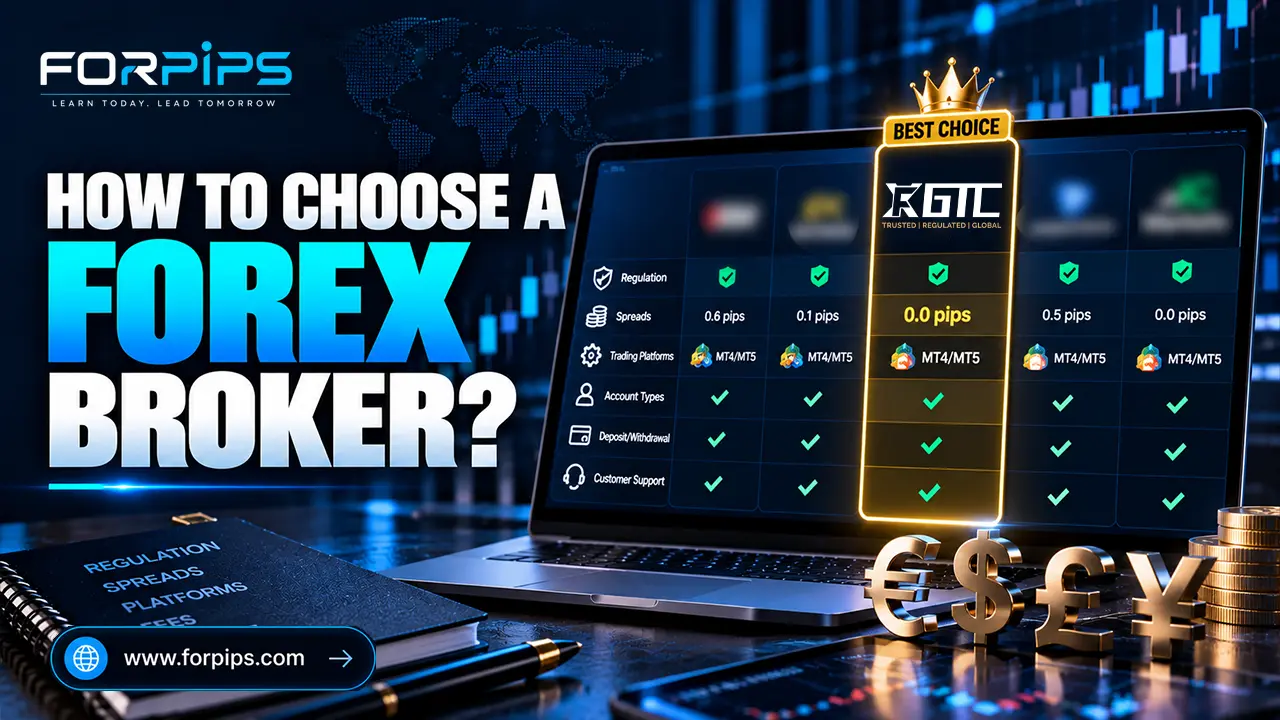
A forex broker is a financial services company that gives traders access to forex trading. In the place of directly connecting with the global foreign exchange market traders generally use a broker’s trading platform to take their trade.
Depending on the broker and your jurisdiction, you may be able to trade: major currency pairs, gold trading, crypto trading, commodities, and CFD. The products available to you depend on the broker, its regulatory permissions, and the laws that apply in your country.
What are the Things You Need to Keep in Mind While Choosing a Forex Broker?
There are a wide variety of things needed to consider while choosing a reliable broker, here are a few of them.
1. Check the Forex Broker’s Regulation
A regulated broker is supervised by a financial regulator and must meet certain requirements applicable to its licence and jurisdiction. Different countries have different regulators. For example, the FCA regulates financial firms in the UK, while other countries have their own regulatory authorities.
The important point is not simply to see the word regulated on a broker’s website. You should verify the broker directly through the regulator’s official database.
The FCA, for example, advises consumers to use its Firm Checker or Financial Services Register to verify whether a firm is authorised and has permission for the services it provides. Also make sure the website and contact details match the information shown by the regulator.
2. Understand Which Entity You Are Opening an Account With
This is an important point that many beginners overlook, a broker may operate through different legal entities in different countries. For example, the same brand could have separate entities serving clients in different jurisdictions.
Before opening an account, check which legal entity will actually hold your account and which regulator supervises that entity. This can make a major difference to the protections and terms that apply to you.
3. Check Spreads Carefully
The spread is the difference between the bid price and ask price of a trading instrument. Many brokers advertise low spreads, but beginners should look beyond the headline number.
There are a wide variety of questions you can ask such as if the spread is fixed, any commission, any trading fees, and many other questions. A broker with a very low advertised spread may not necessarily have the lowest overall trading cost, so always consider spread carefully.
4. Understand Commissions and Other Trading Costs
Spreads are only one part of the cost, depending on the broker and account type, you may encounter things such as commission, swap, deposit fees, and withdrawal fees.
Some brokers charge fees when an account remains inactive for a specified period. The best approach is to calculate the total cost of trading, rather than choosing a broker based on one advertised fee.
5. Review the Provided Trading Instruments
Before opening an account, make sure the broker offers the markets you actually want to study or trade. Do not assume that every broker offers every instrument. Also check the contract specifications, minimum trade size, trading hours, margin requirements, and other conditions for each instrument.
6. Look at Leverage Carefully
Leverage allows traders to control a position that is larger than the amount of capital they deposit as margin, it can increase the size of both gains and losses. For example, higher leverage can allow a trader to open a larger position with less margin. But if the market moves against the position, losses can build quickly.
Regulators have repeatedly highlighted the risks associated with leveraged forex and derivatives trading. Do not choose a broker simply because it offers high leverage. For beginners, understanding risk is more important than having access to the highest possible leverage.
7. Check Trading Conditions
Execution is another important part of choosing a forex broker, when you click the buy or sell button, you want your order to be handled according to the broker’s stated execution model and trading conditions.
Things such as execution speed, order types, slippage policies, margin requirements, and platform stability. These are the conditions required for an instant trade execution.
Additionally, keep in mind that fast execution does not mean every order will always be filled at the exact price you see on the screen. During volatile markets, prices can move quickly.
8. Check Deposit and Withdrawal Options
A broker may look attractive until you try to withdraw your money. Before opening an account you need to understand minimum deposit, available payment methods, withdrawal fees, processing times, and verification requirements. By checking these you can easily find out the reliability of brokers.
Most importantly, read the broker’s withdrawal terms before depositing, never deposit money with a broker if you do not understand how you can withdraw it.
9. Evaluate Customer Support
Good customer support can be extremely useful when something goes wrong. Before opening an account, test the support team with a simple question like, response time, working hours, availability, and supported languages types. A professional broker should clearly explain account procedures, trading conditions, and documentation.
10. Be Careful With Bonuses and Promotions
A large welcome bonus can look attractive, especially to a beginner, but a bonus should never be the main reason for choosing a broker. Sometimes promotional terms can be more complicated than they first appear.
Choose a broker based on its overall services, regulation, costs, and trading conditions, not simply because it offers a promotional reward.
Also read – Major, Minor and Exotic Currency Pairs Explained
Final Thoughts: Choosing a Forex Broker the Smart Way
Learning how to choose a forex broker is an important part of becoming a responsible forex trader. Do not choose a broker simply because it advertises high leverage, extremely low spreads, large bonuses, or high profit claims.
Start with the basics: verify regulation, identify the correct legal entity, understand costs, check trading conditions, test the platform, review withdrawal rules, and research the broker’s background.
Finally, remember that choosing a broker is only one part of forex trading. You also need to understand market risk, leverage, position sizing, trading psychology, and risk management to become a profitable trader.
Frequently Asked Questions About Choosing a Forex Broker
Question. How do I choose a forex broker?
Answer. You can start by checking the broker’s regulation, legal entity, trading costs, available instruments, platform, execution conditions, deposit and withdrawal process, customer support, and regulatory history.
Question. Why is forex broker regulation important?
Answer. Regulation provides a framework of rules and supervision for financial firms. However, regulation does not eliminate trading risk, always verify the broker’s actual authorisation and permissions with the relevant regulator.
Question. What should beginners look for in a forex broker?
Answer. Beginners should focus on verified regulation, transparent costs, a user friendly platform, various trading instruments, instant withdrawal, and excellent customer support.
Question. Is a low spread forex broker always better?
Answer. No, a low spread is only just a factor not a guarantee of profit. You should also consider commissions, overnight costs, execution conditions, regulation, platform quality, withdrawals, and other terms which are required for efficient trading.
Question. How can I check whether a forex broker is regulated?
Answer. Visit the official website of the relevant financial regulator and search for the broker’s legal company name or licence details. Additionally, explore about them on different platforms as relying only on the broker’s own website can be difficult.
Question. What are the biggest forex broker red flags?
Answer. Common warning signs include guaranteed profits, unrealistic return promises, pressure to deposit quickly, unclear company information, unverifiable regulation, and difficulty withdrawing money.
Question. Should I use a forex broker offering very high leverage?
Answer. High leverage can increase both potential gains and losses. Beginners should understand leverage and margin thoroughly before using them and should not select a broker simply because it offers higher leverage.
Question. Should I test a forex broker before depositing money?
Answer. Yes, using a demo account can help you test the trading platform and become familiar with order types and trading tools.
Question. Can I choose a forex broker based only on online reviews?
Answer. No, reviews can provide useful experiences, but they should be combined with official regulatory records, broker documents, trading conditions, and independent research.
Question. What is the most important factor when choosing a forex broker?
Answer. There is no single factor that fits every trader. However, verifying the broker’s regulatory status and understanding which legal entity you are dealing with should be among the first checks, before comparing features such as spreads or bonuses.