

The financial markets offer wide ways to trade, but with extensive options out there it can be confusing which one to choose, especially if you are new to trading. Some traders follow currency prices, while others prefer gold, silver, or commodities such as crude oil. Each market behaves differently, and understanding these differences can help you make more informed trading decisions.
GTCFX trading instruments give traders access to multiple global markets through Contracts for Difference (CFDs). Depending on the available products, account type, and region, traders can explore forex, precious metals, indices, commodities, energy markets, shares, cryptocurrencies, and futures. GTCFX provides an overview of its available markets on its official trading markets page.
But what exactly are these trading instruments? How do they work, and what should beginners understand before choosing one? In this guide, we will explore the main GTCFX trading instruments, and we will also discuss the key factors you need to consider.
What Do You Mean By Trading Instruments?
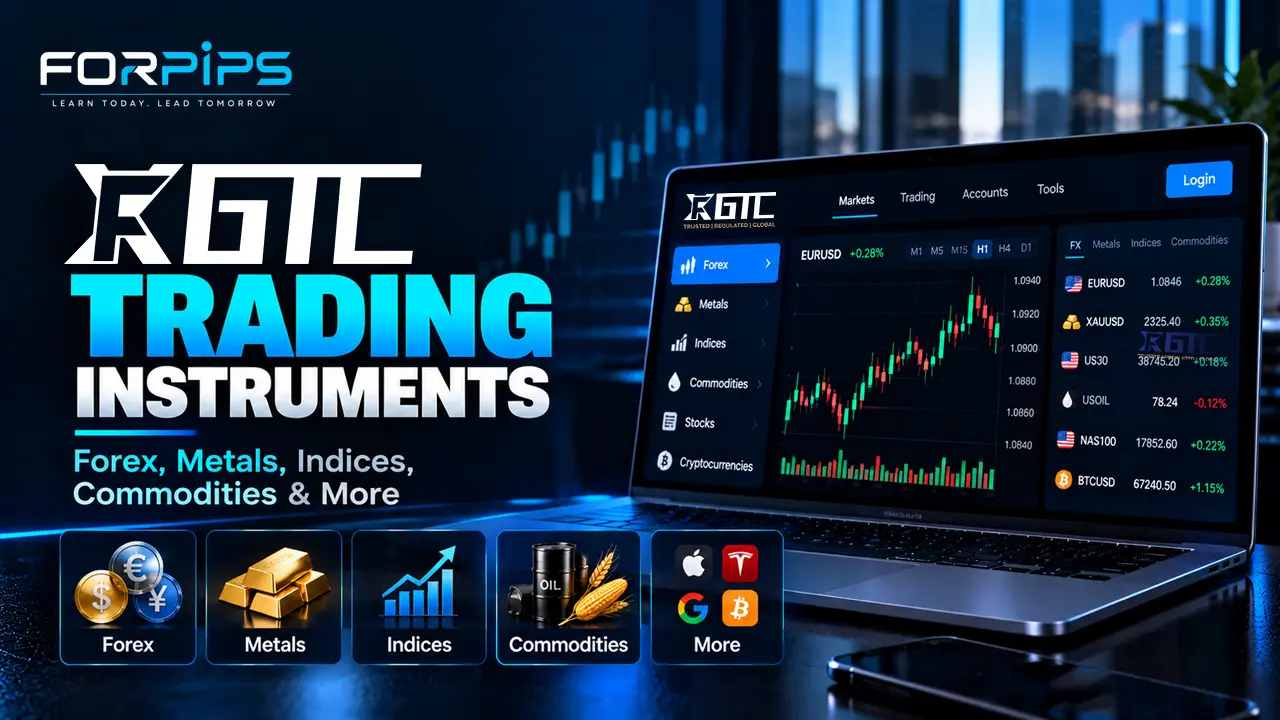
A trading instrument is a financial product or market that you can trade, it determines what you are buying or selling, or which price movement you are trying to follow. For example, EUR/USD is a forex trading instrument, gold is a precious metal instrument, and the S&P 500 is a stock market index.
Different instruments respond to different events. Currency prices can move because of interest rates and economic reports, while oil prices may react to changes in global demand, and supply.
Understanding these differences is important because an instrument that suits one trader may not suit another.
How Do Trading Instruments Work at GTCFX?
GTCFX offers access to global markets through CFDs, or Contracts for Difference, across a range of financial instruments.
A CFD enables you to speculate on the price movement of an underlying asset without owning that asset directly. For example, when trading a gold CFD, you do not need to purchase physical gold. On the place, you take a position based on whether you expect its price to rise or fall.
If the market moves in your favour, your position may generate a profit. If it moves against you, you may experience a loss. Additionally, before trading, always understand the product’s specifications, costs, and risks.
What are the Trading Instruments Available At GTCFX?
There are various types of instruments available at GTCFX for enthusiasts traders. Let’s understand each one of them.
1. Forex Trading
Forex, short for foreign exchange, is the market where currencies are exchanged against one another. It is one of the most widely followed financial markets in the world.
At GTCFX, traders can access forex CFDs based on different currency pairs. These pairs allow traders to speculate on changes in the value of one currency relative to another.
2. Metals Trading (Gold, Silver and Other Precious Metals)
Gold and silver have been valuable for centuries. Today, they are also popular instruments in financial markets because their prices respond to economic conditions, investor sentiment, and global events.
GTCFX provides access to metal CFDs, including gold, silver, platinum, and palladium. Its metals market information also lists instruments linked to different currencies and certain industrial metals.
Gold is one of the most closely watched precious metals in the financial market.
Traders often follow gold during periods of economic uncertainty because investors may increase their interest in traditional safe-haven assets. However, gold prices can rise or fall for several reasons, and demand does not always move in the same direction.
Gold is commonly traded against the US dollar through XAUUSD.
For example, if a trader expects gold prices to rise against the dollar, they may consider a buy position. If they expect the price to fall, they may consider a sell position.
The result depends on the actual price movement, position size, trading costs, and other conditions.
- Silver Trading
Silver is used in jewellery, investment products, electronics, and several industrial applications, because of these different sources of demand, silver prices can react to both investment sentiment and industrial activity.
Traders may follow silver to understand how precious metals are behaving in comparison with gold.
- Platinum and Palladium
Platinum and palladium are precious metals with important industrial uses, particularly in manufacturing and automotive applications.
Their prices can respond to industrial demand, supply conditions, production changes, and economic developments.
4. Commodities Trading (Crude Oil, and Natural Gas,)
Commodities are raw materials or primary products used in manufacturing, agriculture, energy production, and everyday life. Examples include crude oil, natural gas, and certain metals.
Commodity prices can be affected by supply and demand, weather conditions, transportation costs, political developments, and changes in global economic activity.
GTCFX lists commodity CFDs covering different market categories. The products available to individual clients may vary, so checking the current instrument list is important.
5. Energy Trading
Energy markets are an important part of the global economy, businesses and households depend on energy for transportation, manufacturing, heating, and electricity production.
GTCFX lists energy CFDs that include crude oil and natural gas-related products. Its market information includes examples such as Brent crude and WTI crude.
- Crude Oil Trading
Crude oil is used to produce petrol, diesel, jet fuel, and other petroleum products. Oil prices can change because of global demand, production decisions, inventory levels, shipping disruptions, and geopolitical developments.
For example, a supply disruption may increase concerns about the availability of oil.
- Natural Gas Trading
Natural gas is used for electricity generation, heating, and industrial purposes. Its prices can be influenced by seasonal demand, weather conditions, storage levels, production, and transportation capacity.
Cold weather may increase heating demand in some regions, while warmer conditions may reduce it. These effects depend on the location and the wider supply situation.
6. Shares and Equity CFDs
Shares represent ownership in a company. Traditional share investors may buy shares to hold an ownership stake and potentially benefit from dividends or price appreciation.
A shared CFD works differently, it allows traders to speculate on a company’s share price without directly owning the underlying shares.
GTCFX lists shares or equity CFDs among the market categories available through its platform, subject to product and regional availability.
7. Cryptocurrency CFDs
Cryptocurrencies are digital assets that operate using blockchain technology or other digital systems. Bitcoin and Ethereum are two widely known examples.
Cryptocurrency CFDs, where available, allow traders to speculate on changes in cryptocurrency prices without directly holding the digital assets.
GTCFX lists crypto CFDs among its broader market categories, but availability can depend on the applicable entity, jurisdiction, and account.
8. Futures CFDs
Futures contracts are agreements to buy or sell an asset at a specified price on a future date, under the terms of the contract.
A futures CFD is different from directly trading an exchange listed futures contract. It allows a trader to speculate on the price movements of a futures related instrument through a CFD offered by a broker.
GTCFX lists futures CFDs among its market categories.
The underlying market may relate to an index, commodity, or another financial product. Contract details, expiry arrangements, and pricing methods can differ between instruments.
For beginners, the key is to understand exactly what the product tracks before trading it.
Also Visit – GTCFX Review
Final Thoughts: Explore Global Markets With GTCFX
Understanding GTCFX trading instruments is an important first step for anyone learning about online trading. From forex currency pairs and precious metals to global indices, energy products, commodities, shares, cryptocurrency CFDs, and futures CFDs, different markets offer different ways to follow price movements.
However, having access to many instruments does not mean you need to trade all of them. Each market has its own characteristics, costs, trading hours, and risks.
Take time to learn how an instrument works, study the factors that influence its price, and review its contract specifications before opening a position.
Most importantly, remember that leveraged CFD trading carries a high risk of loss. No instrument or trading strategy guarantees profits. A sound understanding of the market, realistic expectations, and careful risk management should always come before placing a trade.
Frequently Asked Questions (FAQs)
Question. What trading instruments does GTCFX offer?
Answer. GTCFX lists broad instruments for its users such as, forex, metals, indices, commodities, energy, shares or equity CFDs, cryptocurrency CFDs, and futures CFDs. The instruments available depend on the applicable entity, region, account, and current product offering.
Question. Can I trade gold with GTCFX?
Answer. GTCFX lists metal CFDs, including gold. Gold is commonly quoted against the US dollar as XAUUSD. Check the relevant instrument page for current trading hours, spreads, contract specifications, and margin requirements.
Question. Does GTCFX offer forex trading?
Answer. Yes, GTCFX lists forex CFDs covering different currency pairs. Traders should understand how exchange rates work and review the costs and risks before trading.
Question. What is the difference between forex and commodities trading?
Answer. Forex trading involves currency pairs, such as EUR/USD. Commodity trading involves markets linked to raw materials or primary products, such as oil, natural gas, wheat, or coffee. The factors that influence their prices can differ.
Question. Can beginners trade indices with GTCFX?
Answer. Beginners can learn about index CFDs, but they should understand how indices work, what moves their prices, and how leverage affects potential losses. Practising with a demo account may help build familiarity before considering live trading.
Question. Does GTCFX provide MT4 and MT5?
Answer. GTCFX lists both MetaTrader 4 and MetaTrader 5, along with its GTC Go app. Check the official platform to confirm current availability and which instruments are supported by your account.
Question. Are all GTCFX trading instruments available in every country?
Answer. No, availability can depend on the country, applicable legal restrictions, the GTCFX entity providing the service, and account conditions. Always check the official terms and product list for your region.
Question. Is trading CFDs risky?
Answer. Yes, CFDs are leveraged financial products that can result in rapid losses. Leverage increases exposure to market movements, so traders should understand the risks, costs, and margin requirements before trading.