

When learning forex trading, understanding risk management is just as important as understanding charts, currency pairs, or technical analysis. One of the basic concepts beginners should understand is risk vs reward.
What does GTCFX Risk vs Reward mean? In simple terms, risk vs reward is a comparison between how much you could potentially lose on a trade and how much you could potentially gain. Traders commonly express this relationship as a risk-to-reward ratio, such as 1:1, 1:2, or 1:3. Let’s understand with an example, if a trader is willing to risk $100 on a trade for a potential gain of $200, the risk-to-reward ratio is 1:2.
GTCFX explains risk vs reward as a pre trade comparison of potential loss and potential gain. It also emphasizes an important point, a favorable risk to reward ratio by itself does not guarantee a profitable trade or trading strategy.
What Does Risk vs Reward Mean in Trading?
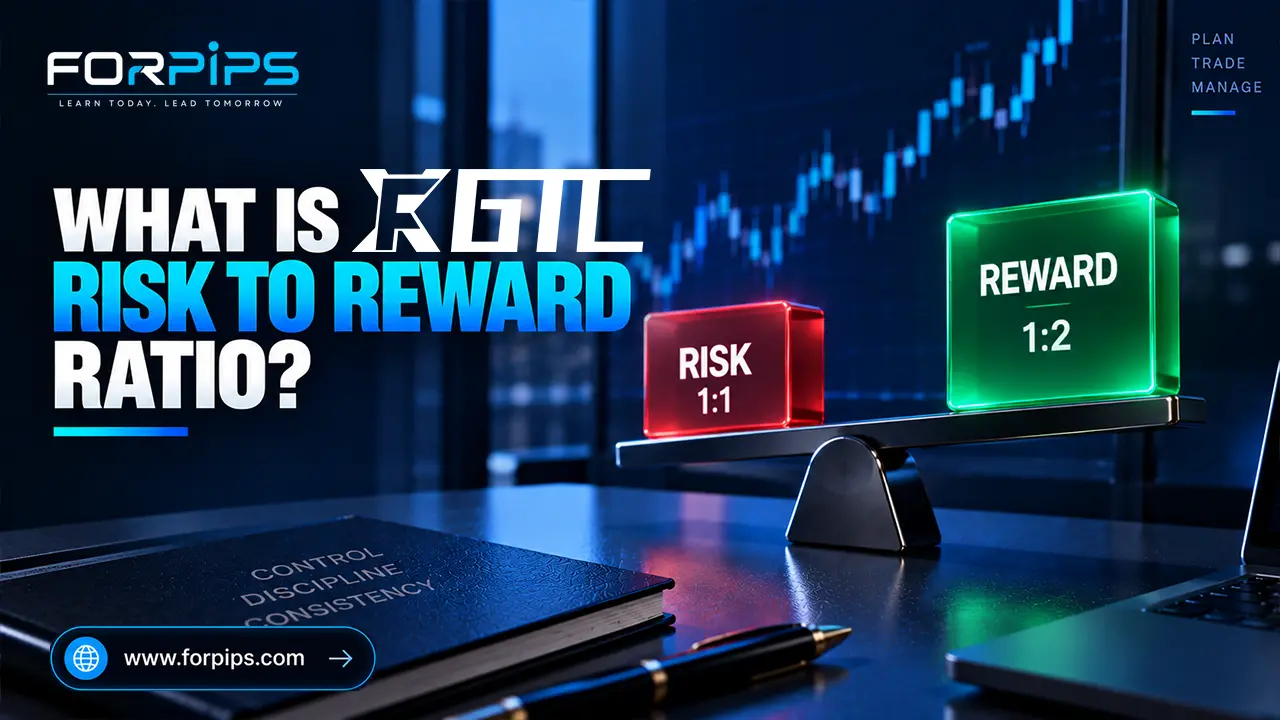
Risk vs reward in trading refers to comparing the potential downside of a trade with its potential upside before entering the position. There are two basic components:
Risk: The amount a trader could potentially lose if the trade moves against them.
Reward: The potential amount a trader could gain if the trade reaches the planned target. For example, imagine a trade where:
Potential loss = $50
Potential gain = $100
The risk-to-reward ratio would be 1:2.
This means the potential reward is twice the potential risk. The comparison is normally made using planned stop loss and take profit levels. The stop loss helps define the potential loss, while the take profit helps define the potential reward.
GTCFX describes this connection between stop-loss distance, take-profit distance, and risk-to-reward planning in its educational material.
What Is a Risk-to-Reward Ratio?
The risk-to-reward ratio (RRR) is a way of expressing the relationship between potential risk and potential reward. A simple way to understand it is:
Risk-to-Reward Ratio = Potential Loss : Potential Gain
Suppose a trader enters a trade at a particular price and plans:
Stop loss: 30 pips away
Take profit: 60 pips away
The planned relationship is:
30 pips risk : 60 pips reward = 1:2
The ratio does not predict what the market will actually do, it simply describes the relationship between the planned loss and planned gain.
What Do You Mean By 1:1, 1:2 and 1:3 Risk-Reward Ratios?
If you are new in the forex market you have heard of ratios such as 1:1, 1:2, and 1:3. If you do not know what they are then understand with live examples given below.
1. 1:1 Risk-to-Reward Ratio
A 1:1 ratio means the potential reward is equal to the potential risk. For example:
Risk = $100
Potential reward = $100
If the trade reaches the target, the potential gain equals the amount initially risked. Mathematically, a 1:1 ratio requires a 50% win rate to reach breakeven before considering costs such as spreads and commissions.
2. 1:2 Risk-to-Reward Ratio
A 1:2 ratio means the potential reward is twice the potential risk. For example:
Risk = $100
Potential reward = $200
The mathematical breakeven win rate is approximately 33.3%, before trading costs. This does not mean a trader should automatically use a 1:2 ratio. It simply demonstrates how the mathematics of risk and reward work together.
3. 1:3 Risk-to-Reward Ratio
A 1:3 ratio means the potential reward is three times the potential risk. For example:
Risk = $100
Potential reward = $300
The mathematical breakeven win rate is 25%, before trading costs. These examples show why risk-to-reward ratio should not be considered separately from the probability of a trade reaching its target.
How Do Stop Loss and Take Profit Affect Risk vs Reward?
Two important tools in risk management are stop loss and take profit.
- Stop Loss
A stop-loss order is used to define an exit level if the market moves against the position. For example, if a trader enters a hypothetical EUR/USD position and places a stop loss 30 pips away, those 30 pips represent the planned price distance risk, the actual financial loss can also depend on position size and other trading conditions.
- Take Profit
A take-profit level defines the planned exit if the market reaches the desired target. Suppose the stop-loss distance is 30 pips and the take-profit distance is 60 pips. The planned ratio is:
30 : 60 = 1:2
Therefore, stop loss primarily defines the risk side of the comparison, while take profit defines the reward side.
Why Is Risk vs Reward Important in Forex Trading?
Understanding risk management in forex trading helps traders consider the potential downside of a trade rather than focusing solely on possible profits. Instead of asking only, how much can I make? beginners should also consider, how much could I lose if the trade does not go as planned?”
Risk vs reward encourages traders to evaluate both potential outcomes before entering a position and connects important elements of a trading plan, including entry criteria, stop-loss and take-profit placement, position size, potential loss and trading costs.
GTCFX places risk vs reward within a broader risk-management framework that also considers concepts such as leverage, margin, and effective trading-plan considerations.
What are the Common Mistakes Beginners Make With Risk vs Reward?
There are lots of mistakes beginners make while applying it. Let’s break down a few of them.
1. Focusing Only on the Reward
Seeing a potential $300 profit while ignoring a potential $100 loss can lead to an incomplete view of the trade. Risk should be considered before potential return.
2. Assuming a 1:2 Ratio Guarantees Profit
A 1:2 ratio does not guarantee that the trade will reach its target, the market may hit the stop loss instead.
3. Choosing an Unrealistic Take-Profit Target
A trader should not simply move the take-profit level farther away to create a larger ratio. The target should be considered in the context of the trading setup, market conditions, and the strategy.
4. Ignoring Trading Costs
Spread, commissions, slippage and other costs can affect the actual outcome, the simple breakeven calculations for ratios generally do not include these costs.
5. Ignoring Position Size
Risk is not determined only by the number of pips between entry and stop loss, position size is also an important aspect which can affect the monetary value of the potential loss.
Read More – What is GTCFX Copy Trading
Final Thoughts: What Is GTCFX Risk vs Reward?
GTCFX Risk vs Reward is fundamentally about comparing the potential loss of a trade with its potential gain before entering the position. A ratio such as 1:2 means that the potential reward is twice the potential risk. However, the ratio itself does not guarantee a profitable result. For beginners, the key lesson is simple, do not look at potential profit without considering potential loss.
Risk to reward ratio becomes more meaningful when considered alongside win rate, position size, trading costs, strategy, and overall risk management. GTCFX’s educational material also stresses that a favorable ratio alone cannot determine whether a trade or trading approach will be profitable.
Understanding these concepts can help beginners build a more structured approach to learning forex and CFD trading while maintaining risk.
GTCFX Risk Vs Reward: Frequently Asked Questions?
Question. What is risk vs reward in forex trading?
Answer. Risk vs reward in forex trading compares the potential amount a trader could lose with the potential amount they could gain on a trade.
Question. What does a 1:2 risk to reward ratio mean?
Answer. In simple terms, it means the potential reward is twice the potential risk.
Question. Is a 1:2 risk to reward ratio always good?
Answer. Not always, a ratio alone does not guarantee profitability, win rate, market conditions, strategy, trading costs and other factors also matter.
Question. What is the difference between risk and reward?
Answer. Risk represents the potential loss, on the other hand reward represents the potential gain from a trade.
Question. How does stop loss affect risk reward ratio?
Answer. The distance between the entry price and stop loss level helps define the potential risk. The distance between entry and take profit helps define the potential reward.
Question. Can risk to reward ratio guarantee profits?
Answer. No, risk to reward ratio is a planning and comparison tool; it cannot guarantee that a trade will reach its target or produce a profit.
Question. What are 1:1, 1:2 and 1:3 risk-reward ratios?
Answer. They describe the relationship between potential risk and potential reward. A 1:1 ratio has equal potential risk and reward, 1:2 has twice the potential reward, and 1:3 has three times the potential reward.
Question. Is the risk to reward ratio enough to evaluate a trading strategy?
Answer. No, it should be considered alongside factors such as win rate, average win, average loss, trading costs and overall strategy performance.