

When you start trading forex or CFDs, you will heared terms such as margin requirement, free margin, used margin, and margin level. At first, these terms may sound complicated, but understanding them is easier than you might think.
If you trade with GTCFX or are learning how leveraged trading works, knowing how margin works can help you understand your trading account and the risks involved before opening a position.
Margin is the amount of money required to open and maintain a leveraged trade. Free margin shows how much equity remains available after accounting for used margin, on the other hand margin level shows the relationship between your account equity and the margin committed to your open positions.
In this simple guide, we will explain GTCFX margin requirements, free margin, used margin, margin level, margin calls, and stop out levels in simple language, with practical examples to help beginners understand. Let’s get started.
What Do You Mean By Margin in Trading?
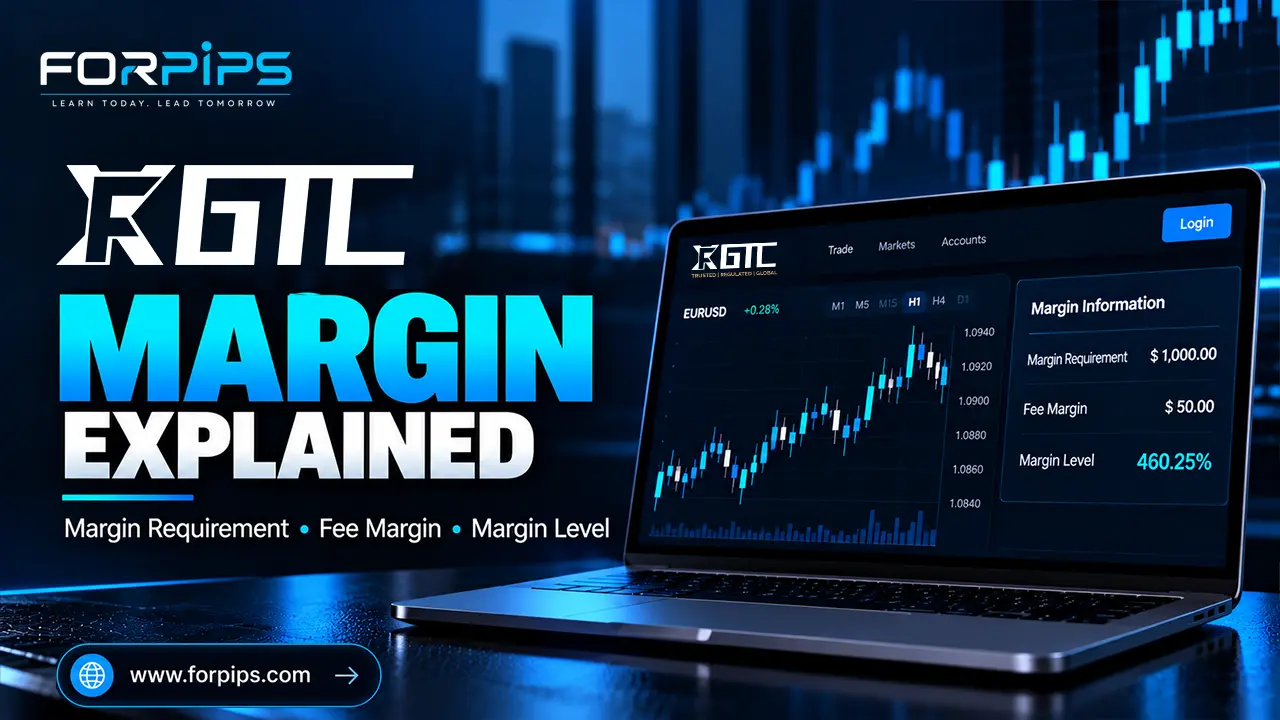
Margin is the amount of money your broker requires you to have in your account to open and maintain a leveraged position. Think of it as a security deposit that supports your trade.
For example, imagine you want to open a trading position worth $10 thousand but the required margin is $500. You would need $500 in margin to open that position, assuming your account meets the broker’s other requirements.
The important thing to understand is that margin is not the same as the total value of your trade. It is also not a fee that you automatically lose when opening a position. However, you can lose money if the market moves against you, and trading costs may also apply.
Margin is closely connected to leverage, it allows you to control a position worth more than the margin you provide, but it also increases your exposure to market movements.
For beginners, understanding this relationship is important before trading forex, gold, indices, or other leveraged products.
How Does Margin Work at GTCFX?
When you open a trade through a broker such as GTCFX, the platform calculates the margin required to support that position. The amount depends on factors such as the instrument you are trading, the size of your position, the applicable leverage, and the broker’s trading conditions.
For example, a currency pair and gold may have different margin requirements. Similarly, a larger position will generally require more margin than a smaller position when other conditions remain the same.
Once your trade is open, the required amount becomes part of your used margin. The rest of your account equity may remain available as free margin.
As the market moves, your open trade can make a profit or loss. This changes your account equity and, consequently, your free margin and margin level.
GTCFX publishes educational material explaining how margin, free margin, and margin level work. Its guidance also highlights that specific margin requirements and account-protection thresholds can vary by instrument, account type, and applicable jurisdiction.
Additionally, check the current conditions for your own account before placing a trade.
What Do You Mean By a Margin Requirement?
A margin requirement is the amount of money you must provide to open or maintain a particular trading position.
It is often expressed as a percentage of the position’s value, the required percentage is closely related to the leverage available for that instrument.
What is Used Margin?
Used margin is the amount of your account equity currently committed to support your open trades.
When you open a position, the broker calculates the required margin, that amount becomes a used margin while the position remains open.
If you have multiple trades, the platform generally calculates your total used margin based on the requirements for all your open positions.
What is a Margin Call at GTCFX?
A margin call is a warning or account event associated with a decline in available margin or margin level. It indicates that your account may be approaching a threshold where the broker’s margin rules require attention or further action.
A margin call can occur when open positions move against you and losses reduce your account equity.
Let’s take an example, if your trades experience losses, your equity and free margin may decrease. Your margin level may also fall, if it reaches the relevant threshold, a margin call may be triggered according to the applicable account rules.
Depending on the broker’s procedures, a margin call may prompt you to review your positions, reduce exposure, or add funds. You should not assume that every broker uses the same threshold or notification process.
GTCFX’s educational material distinguishes the margin call warning from the stop-out process and advises traders to verify the rules that apply to their account.
What Should You Do if Your Margin Level Falls?
First, check your current equity, used margin, free margin, and open positions. Understand how much exposure you have and whether your account is approaching the applicable threshold.
Depending on your circumstances, you may consider reducing position sizes or closing some positions. Adding funds is another possible response, but it does not remove the risk of further losses.
Avoid opening additional positions simply because you hope the market will recover. The priority should be understanding your exposure and making decisions based on your trading plan rather than emotion.
What is a Stop Out Level?
A stop out level is a system where a broker’s system may begin closing open positions automatically because the account’s margin level has fallen too low.
It is generally a more serious stage than a margin call, once the applicable stop out condition is met, you may lose control over which positions are closed and when they are closed.
For example, if a losing position continues to reduce equity, your margin level may eventually reach the broker’s stop out threshold. The platform may then close one or more positions according to its rules.
The exact process can vary, some providers may close positions based on their level of loss or another specified procedure.
Do not assume a particular order of closure without checking the relevant terms.
Also Explore – GTCFX Review
Final Thoughts
Understanding GTCFX margin requirements, free margin, and margin level is an important step towards learning how leveraged trading works.
Margin requirement tells you how much capital is needed to support a trade. Used margin shows how much is committed to your open positions.
Free margin shows the remaining equity after used margin is deducted, while margin level compares your equity with your used margin.
These figures work together and change as your account equity and open positions change. By monitoring them, choosing sensible position sizes, and understanding the broker’s margin rules, you can make more informed decisions about your trading exposure.
Remember that knowing how margin works does not eliminate trading risk. Forex and CFD trading can result in substantial losses, and you should never trade with money you cannot afford to lose.
For the latest requirements, always refer to the official GTCFX website and the terms that apply to your specific account.
Frequently Asked Questions About GTCFX Margin
Question. What is the margin in GTCFX trading?
Answer. Margin is the amount of capital required to open and maintain a leveraged position. The required amount depends on the instrument, position size, applicable leverage, and the conditions that apply to your account.
Question. How is margin requirement calculated?
Answer. A simplified calculation is: Required margin = Position value × Margin requirement percentage. For example, a $10,000 position with a 2% margin requirement would need $200 in margin. Actual calculations may involve additional instrument-specific rules and currency conversions.
Question. What is free margin in forex trading?
Answer. Free margin is generally calculated by subtracting used margin from account equity. It represents the equity not currently committed to supporting open positions and may be available for new trades, subject to the broker’s requirements.
Question. What is a good margin level?
Answer. A good margin level generally means you have more equity relative to your used margin. However, there is no universal percentage that guarantees safety. The appropriate level depends on your exposure, account conditions, and the broker’s margin rules.
Question. Can free margin become negative?
Answer. Yes, free margin can become negative if account equity falls below used margin. This can occur during substantial losses or rapid market movements.
Question. What happens when a margin call occurs at GTCFX?
Answer. The process depends on the applicable GTCFX account terms and margin thresholds. A margin call may serve as a warning that your account’s margin position has weakened. If conditions deteriorate further, the account may reach a stop out threshold where positions can be closed automatically.
Question. Does higher leverage mean lower risk?
Answer. No, higher leverage generally reduces the margin needed to open a position of a given size, but it does not reduce the market exposure of that position. It can make losses larger relative to your available capital.
Question. Where can I check GTCFX margin requirements?
Answer. Check the relevant instrument specifications, your trading platform’s order window, and the account documentation provided by GTCFX. Confirm the current margin requirements and applicable margin call and stop-out rules before placing a trade.